Oilfield Waste
Tank Storage and Secondary Containment on a Lease
Tank types, how containment is sized and built, and the walk-around inspection that catches the problems that turn into reportable releases.

What an approved collector will and will not take, why mixing streams is the expensive mistake, and how to set up a lease so collection is straightforward.
 By Dale Whitcombe · Field Operations Writer & Founding Editor
· Published
· Last updated
· 4 min read
By Dale Whitcombe · Field Operations Writer & Founding Editor
· Published
· Last updated
· 4 min read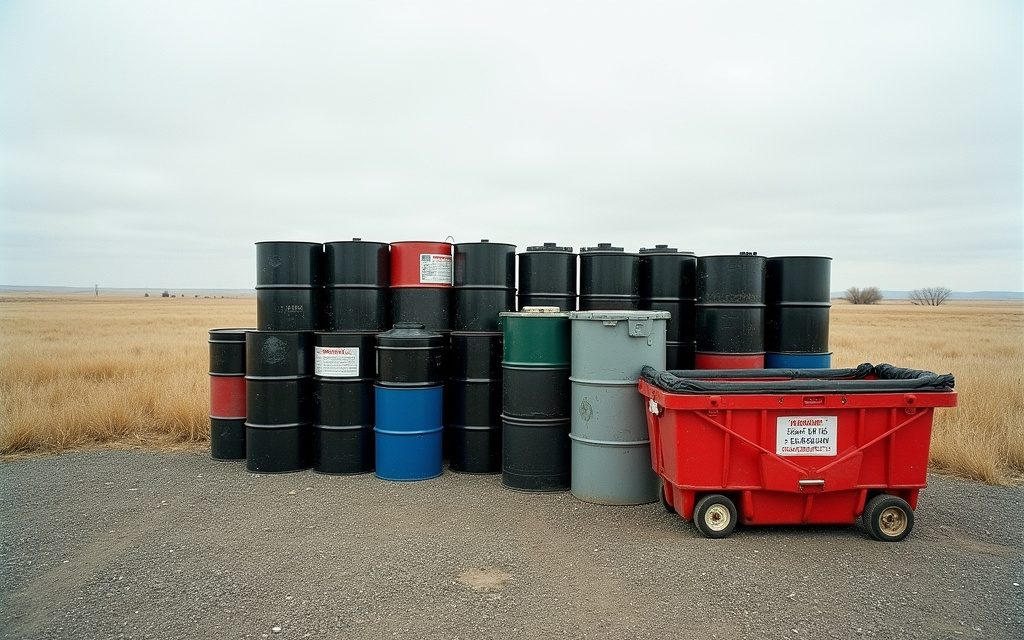
Every producing property generates a steady trickle of waste that is not water: drained lube and waste oil, used filters, oily rags and plastics, glycol from dehydration units, and assorted containers. It is not glamorous and it is easy to let slide, which is exactly why it turns into a problem on so many leases.
The governing principle is short enough to put on a sign: keep the streams separate. Almost every expensive outcome in this area starts with two things that should have been in different containers ending up in the same one.
A collector approved to handle upstream oilfield waste will typically take, as separate streams:
What a collector will generally not take, or will take only under a different arrangement, includes anything hazardous, solvents, unidentified chemicals, batteries, aerosols and anything whose origin nobody can state.
Clean waste oil is a commodity. It can be re-refined or burned as fuel, and it has a market value that offsets collection cost.
Waste oil with solvent in it is not a commodity. It becomes a waste requiring disposal rather than a product, the price flips from a credit to a charge, and the whole container is affected, not just the portion that was contaminated. Tip a pail of unknown solvent into a full waste oil tote and you have converted a saleable asset into a disposal cost, plus whatever it takes to determine what is now in there.
The same logic applies to glycol. Kept separate it has a recovery path. Mixed into waste oil it degrades both.
This is the single highest-return housekeeping item on most leases, and it costs nothing but labelling and discipline.
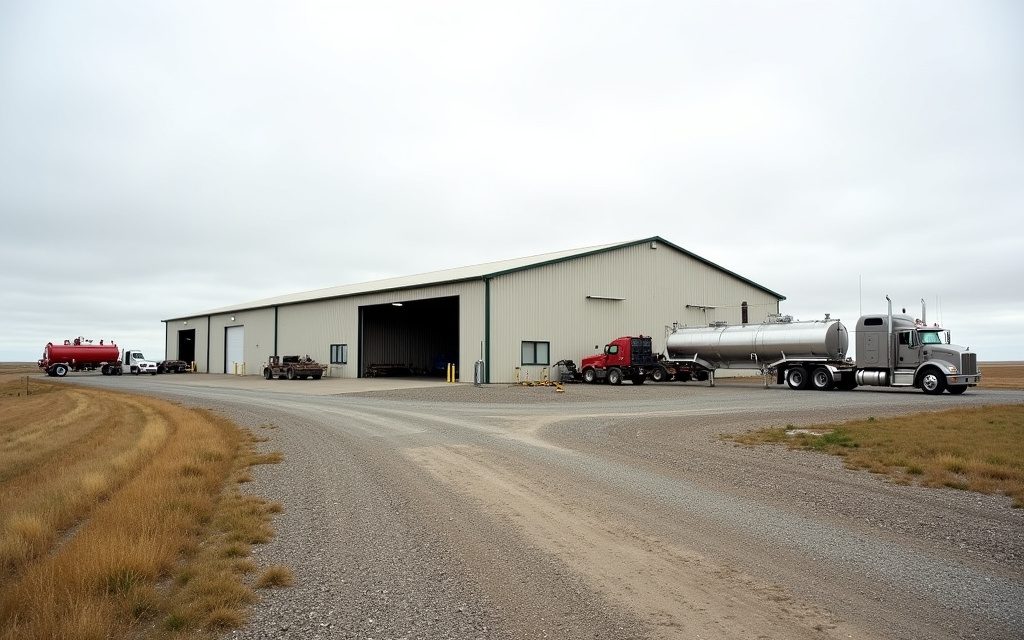
A collection unit arrives, verifies what is there against what was expected, pumps liquids and loads solid streams, and leaves you with documentation. Smaller properties are typically serviced by a modest vacuum or tanker unit, sometimes a few cubic metres of capacity, on a scheduled or on-call basis; larger volumes and longer hauls use larger equipment.
If a collector declines something, get the reason in writing. It is nearly always characterisation, and knowing which container is the problem means you can fix it rather than guessing.
The generator is responsible for knowing what the waste is, storing it appropriately, handing it to a party approved to receive it, and keeping the documentation. That responsibility is not transferred simply by getting the material off the lease.
The requirements sit principally in the AER's oilfield waste management directive. As with everything on this site, check the current version rather than relying on this summary. Our regulatory overview sets out the broader framework.
Burning used oil is regulated and depends on the equipment, its approvals and the oil's characterisation. Do not assume it is permitted because the heater will physically accept it. Check the current requirements before doing it.
Do not add it to anything, and do not guess. Isolate it in containment and arrange for it to be identified. Unknown material is handled as the most restrictive plausible category until characterised, which is expensive, and that is precisely why unlabelled drums are worth preventing.
Ethylene glycol is toxic if ingested and is a genuine hazard to livestock and wildlife because it is sweet-tasting. Handle spills seriously and keep it contained. Triethylene glycol, more common in dehydration service, is less acutely toxic but is still a waste stream requiring proper handling.
Often enough that containers never approach full, and frequently enough that material is not sitting in the weather for months. On a small property that may be a few times a year; on a busy one, monthly. If you are routinely calling for an urgent pickup because something is overflowing, the schedule is wrong.
Tank types, how containment is sized and built, and the walk-around inspection that catches the problems that turn into reportable releases.
Approval class, what they will actually accept, turnaround, how rejections are handled, and the documentation you should expect back with every load.
Where the water comes up from, what is dissolved in it, and the specific reasons it cannot be put on the ground or into a creek.